
The New Inn Stream is not a large and iconic waterway. It is a small and rather nondescript stream that starts its life in the emergence of countless springs in corners of fields and hedges, and then gathers the runoff that the Pembrokeshire rain washes from the fields, roads, driveways, and gardens that make up its catchment to the south and east of Tavernspite. As its small tributaries flow south, they collect into the larger stream, known locally as the “New Inn Stream”. This flows through the tangled woodlands at the bottom of the valley at the western edge of Marros Mountain and to the south and below Factory Lane until it runs alongside the New Inn public house and thence into the sea.
The runoff from our watershed is not selective. It gathers the natural — the fallen leaves, the twigs, the soil, the decaying bodies of small animals — as well as the by-products of human lives — the litter and plastic waste we throw into our verges and hedgerows, the slurry from our cows, the herbicides and pesticides that are sprayed on our crops in the fields, the discharges of our own sewage leaking and leaching from our septic tanks and water treatment plants, and the chemicals we use in our houses and gardens. The stream even contains microplastics and the excreted metabolites of the medicines we have used to treat our pets, our farm animals, and ourselves. The natural and the manmade are gathered altogether and mixed by the stream’s turbulence into a liquid chemical cocktail of human life in our villages in the 21st century. After bearing the detritus of field, farm, forest, and our complicated lives, the water will finally reach the pebble embankment at the shore below the New Inn Bridge and filter through those great stones into Amroth Bay.
The New Inn Stream may be ‘nondescript’, but it is ‘our stream’ and, if we take the time to look into her waters, they will share their story. Like a mirror, our stream reflects back to us exactly what we have allowed it to become. We are looking at ourselves and how we treat the world that we live in.
In 2022, a conservation group, the Llanteg and Amroth Renaturing Community (LARC), decided to undertake a one-year water quality study on this stream. Our group published a report — a technical report full of methods and results, but also a story of a group of people who wanted to understand why this stream, like many others across our country, appeared lifeless, unlike the streams that were so full of life that we remember from our childhoods.
We do not pretend to have the answers to solve a problem that is embedded in our local economy, in the way we farm, in the way we live our lives and dispose of our waste, in the way that regulatory bodies seem so emasculated in their ability to respond, or in the way that large water companies have tried to hide their ‘dirty secrets’ of leaks and discharges. What we can do is shine a light on the state of ‘our’ stream and start an honest conversation within the community.
Before you read this report (available at https://www.greensheepcamping.co.uk/category/information-reports/), please take a few minutes to read the following passage called Tawelan Brook. It was specially written by a friend of LARC, Professor Carl Jones, BSc, MSc, PhD, MBE. After you have read Tawelan Brook, Carl’s childhood stream near St. Clears, perhaps reflect upon memories of a stream, a river, or the sea that is special to your heart.
We copy Carl’s Wikipedia entry below because he is a local boy from St. Clears. His uncle was a drinking buddy of Dylan Thomas and considered to be the inspiration for Butcher Beynon in Under Milk Wood. For those of you who may not have heard of Carl, he is understood to have ‘saved’ more species from extinction than any other living person. He is a legend in conservation circles, now living near Llandovery and deeply rooted in West Wales.
Carl Gwynfe Jones MSc PhD MBE is a Welsh conservation biologist who has been employed by the Durrell Wildlife Conservation Trust since 1985, and a founding member and scientific director of the Mauritian Wildlife Foundation. Additionally, he is Chief Scientist at the Durrell Wildlife Conservation Trust and an honorary Professor in Ecology and Conservation Biology at the University of East Anglia. Often outspoken on the importance of knowing your species and using intuition, empathy, and practical knowledge over dogmatic education, Jones is best known for his work in recovering the Mauritius kestrel from just four individuals in 1974 to an estimated 400. Working in Mauritius since 1979, Jones has led five successful bird restoration projects where the starting population has numbered fewer than 12 individuals; as a consequence, Mauritius has averted more bird extinctions than any other country.
Source: Wikipedia(2022). CarlG.Jones.
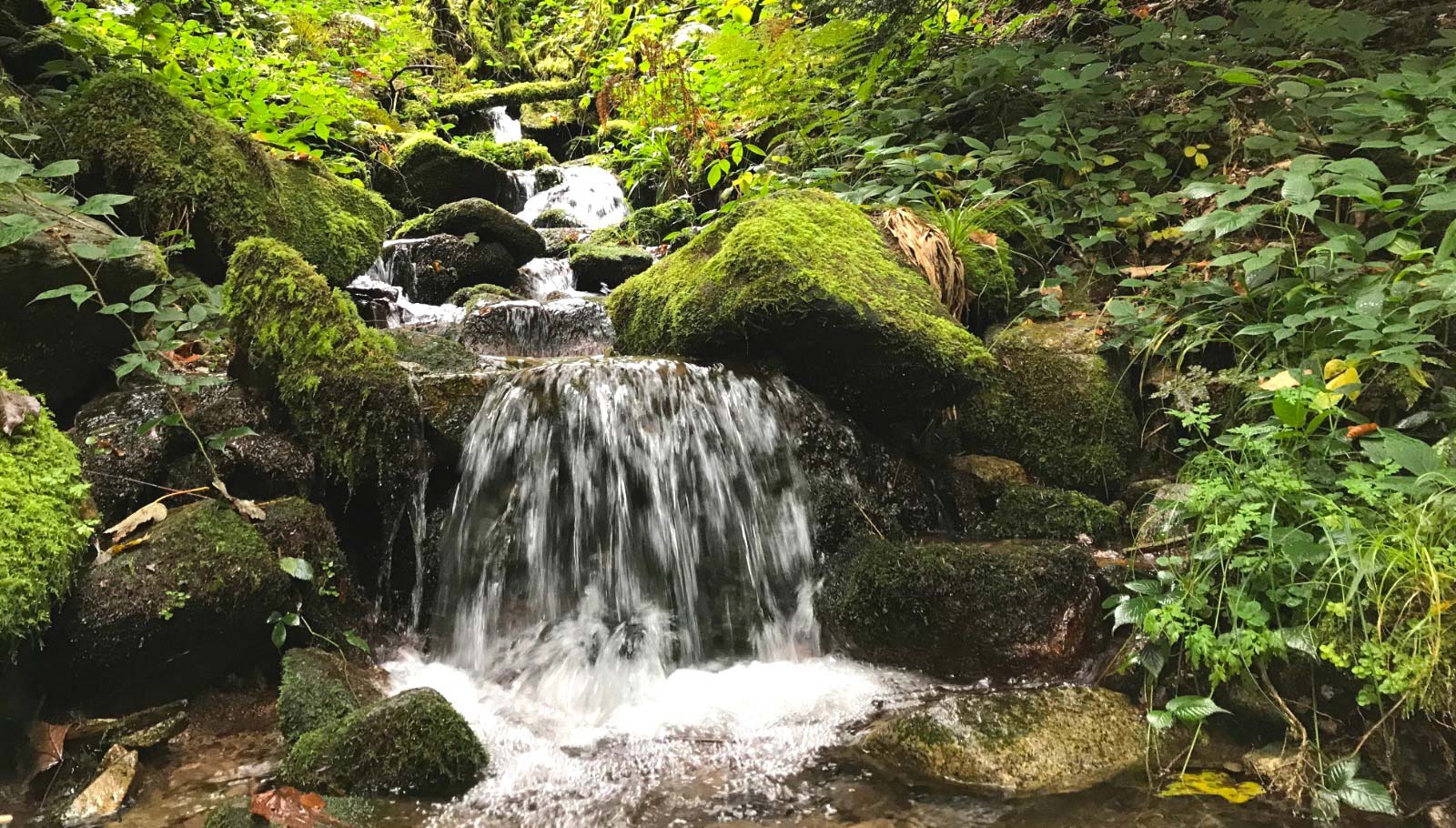
Tawelan Brook by Carl Jones, MBE
I grew up near Carmarthen, and half a field away from my home was the Tawelan Brook that became my haunt as a young boy getting to know the world. With my friends we explored down to where our stream became languid and merged with the River Towy, and upstream to where it was a youthful brook and we would dare each other to jump across. We named each section, the rapids and shallows, and our favourite fishing spot, with its dark, deep waters, where we caught trout and eels, we named “Paradise Pool”. Further upstream, half a mile from my house, was a marshy, waterlogged area surrounded by clogged drainage ditches where reeds grew. This was the Rushy Field where I saw my first water rail and where reed buntings lived.
I got to know the stream, to understand her moods, the gentle sparkling trickle of summer and the tempestuous autumn spates. To me she was alive and pulsing with personality. The banks had been undercut by the winter floods, and gnarled Alder and Willows overhung the water, and among the tangled roots and shelving banks the biggest trout lurked. In May the elvers arrived in their thousands, glassy and transparent. We would catch them in jam jars to look at them closely, and could see their backbone and internal organs. Later in the summer the Sewin, vibrant and silver, travelled up from the sea. Salmon spawned in the winter and on clear frosty nights I ventured forth with a strong light to watch them winding their way upstream, their dorsal fin breaking the surface as they moved over the shallow rapids.
My friends and I referred to the brook rather grandly as the river, and in my mind she was grand, and still occupies that sacred place full of happy childhood memories, of kingfisher and dragonfly summers, and dabchick winters. It was on the banks of the Tawelan I learned the skills of a naturalist and the template of my life was set. I left Wales to become a conservationist, and during quiet moments of contemplation I have often drifted back to the hours spent on and in the brook, as a trout-tickler, bird watcher, and childhood explorer.
After half a century I revisited the river and walked in my young footsteps. Paradise Pool is still there, although I saw no fish. Further up towards my old home, much of the stream has been canalised, sanitised, no more undercut banks and no leaning Alder and Willow. Eels are now Critically Endangered and I doubt many Salmon ever breach the shallows. The Rushy Field where the moorhens skulked and bred has been drained and is now a housing estate. I stood on the bank looking into the brook; I was returned to what was and what could be.
What would the World be, once bereft
Of wet and of wildness? Let them be left
O let them be left, wildness and wet;
Long live the weeds and the wilderness yet.
Gerald Manley Hopkins
This piece is taken from the authors’ reflection published as Bailey, T.B., K.J. Caley, A. Dawe & T. Cormack (2024). New Inn Stream Water Quality Monitoring Project, or ‘Keep the Streams Clean’. Llanteg & Amroth Renaturing Community, 64 pp. LARC-R-NIS-01.E01.01.2024.
The full Citizen Science report on the New Inn Stream is available online at:
https://www.greensheepcamping.co.uk/category/information-reports/