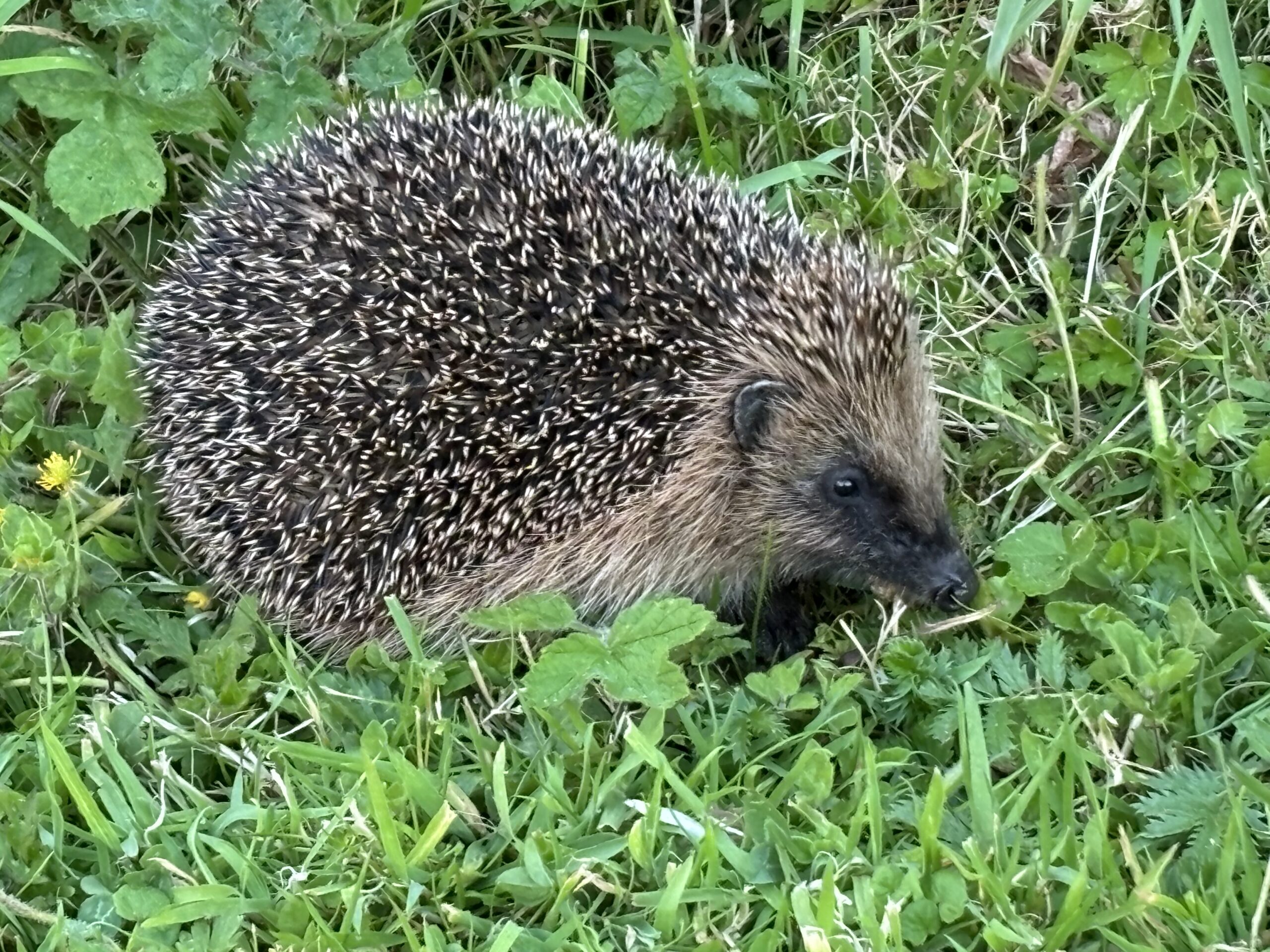
Stop scrolling — this is about mud, hedgehogs, and soil the consistency of blancmange.
Before English speakers borrowed the Latin name February, this time of year had a far more honest title in the Anglo-Saxon calendar: Solmōnaþ (sohl-mo-nath). In Old English, sol meant mud or mire, and monath simply meant month — the ancestor of our modern word. Together, it translates neatly as “mud month.” Given the weather, it still feels spot-on.
It has certainly earned the name here. Fields are waterlogged, and in our new woodland a few young trees have succumbed to recent gales, their roots loosened by soil the consistency of blancmange. Yesterday, Theri and I spent the morning resurrecting the wobbliest ones with stakes and ties. On the brighter side, February also heralds the return of frogs and toads to the ponds. More than once this week we’ve had to stop along the track to usher amphibians to safety — traffic wardens of the mud month.
Despite the soggy trails, this has become hedgehog month for me — a moment to think about these spiky little characters and why they need our help.
For those following along: December was about running miles for Love4Lotti and breast cancer awareness, January for my brother and prostate cancer awareness. Theri and I kept moving (2–6 km a day) with a simple goal: at least one mile — about 2 km — every day whatever the weather and however we felt. We’ve carried that into February, partly because once you say it out loud, you’re committed.
From 18/02/2026, we’re taking on the Walk for Lent organised by CAFOD (Catholic Agency for Overseas Development) — 5 km a day in support of overseas development. In the 18-day gap between challenges, I decided to donate £1 per mile run to Pembrokeshire Hogspital (https://pembrokeshirehogspital.org/), run by friends Ginnie and Russ Spencely. They do extraordinary work rehabilitating injured and orphaned hedgehogs so they can return to the Pembrokeshire countryside. Huge respect to wildlife rehabilitators everywhere — a remarkable, devoted tribe. In summer 2024 we released three rehabilitated hedgehogs from the Hogspital into our farm from one of our empty chicken runs refurbished as a release pen.
Between 1st and 18th February, Strava tells me I ran 52 km, so I’m donating £52 to the Hogspital. A small gesture, but a heartfelt one.
Because hedgehogs are genuinely in trouble. Once common in gardens and hedgerows, they’re now Red-Listed in Great Britain, with national declines of 30–75% since 2000. In Wales, the State of Mammals Report (NRW, 2020, https://nora.nerc.ac.uk/id/eprint/530793/) estimated a population of roughly 56,800 animals, and trends suggest continued decline — particularly in rural areas. Many of us of a certain age remember how ordinary hedgehog sightings once felt when we were kids. That they are now a rarity should give us pause.
Habitat loss, fragmentation, dwindling insect prey, ecologically unsympathetic industrialised farming, and roads all play a part. But there’s plenty we can do — from making gardens hedgehog-friendly to supporting local rescues. In my case it was an excuse to keep plodding on even in the particularly wet weather we’ve experienced in February.
Here’s to mud, miles, hedgehogs… and perhaps a little hope.