
There’s a moment at Green Sheep Camping when the day finally exhales. The last mugs of tea cool, the hedgerows settle, and the meadow — so busy with bees and butterflies just hours earlier — hands the shift over to an entirely different workforce. Under the stars, Pembrokeshire’s moths take flight.
Most people think of butterflies when they think of pollinators. But moths? These night-flying relatives quietly shoulder an enormous ecological role. In fact, many plants rely on moths for pollination, particularly those that release scent after sunset. If butterflies are the daytime celebrities, moths are the unsung night crew — subtle, essential, and astonishingly diverse.
And here in Pembrokeshire, we’re surrounded by them.
Why Moths Matter More Than You Think
Moths are not just “butterflies with worse PR.” They are vital pollinators, key prey species for bats and birds, and remarkably sensitive indicators of environmental health.
Farmland covers around 70% of the UK landscape, which means ecologists need to understand exactly what’s happening on agricultural land if we’re serious about conserving biodiversity. Moths help tell that story.
Why?
Because moths are:
- Easy to monitor using light traps
- Incredibly species-rich (many more moth species than butterflies)
- Responsive to habitat change
- Excellent indicators of wider ecosystem health
Changes in moth populations often reflect shifts in vegetation, land management, climate, and pollution. In short: if moths are doing well, the environment usually is too.
A Summer of Moths: Our 2025 Monitoring Project
In summer 2025, Green Sheep Camping joined fellow landowners across the Pembrokeshire Coast National Park in a farmer- and landowner-led moth biodiversity monitoring initiative.

The project, developed locally by Clare Flynn, Conservation Officer of Pembrokeshire Coast National Park Authority, formed part of a wider survey coordinated by the UK Centre for Ecology & Hydrology (UKCEH). The goal? To better understand moth biodiversity across farmland and managed landscapes.
This growing movement of farmer-led monitoring has huge benefits:
✔ Landowners gain deeper ecological insight into their land
✔ Scientists receive large-scale, real-world biodiversity data
✔ Conservation decisions become better informed
✔ Communities reconnect with nature
Participants even shared skills with neighbours — a brilliant example of collaborative conservation in action.
The Technology Changing Wildlife Recording
One of the most exciting aspects of the programme was the use of AI-assisted identification. UKCEH developed the eSurveyor app, initially designed for farmers and landowners to record habitats. It was later expanded to include a moth recording survey:
Users log location and date
Photograph each moth from the trap
AI suggests identifications
The results have been remarkably encouraging:
- 93% of macromoth identifications were correct (species or species aggregate) when verified by human experts
- Only 2% were completely incorrect
For ecological monitoring, that’s a game-changer — making biodiversity surveys more accessible, scalable, and engaging.
How Moth Trapping Works (and Why It’s Harmless)

Modern moth traps are:
- Portable
- Simple to use
- Powered by rechargeable battery packs
- Designed to safely attract moths with light
Moths rest inside overnight and are released unharmed after recording. No chemicals, no damage — just observation and data collection.
For campers joining one of our occasional moth evenings, it’s often a revelation.
Moths & Meadows: A Perfect Pairing
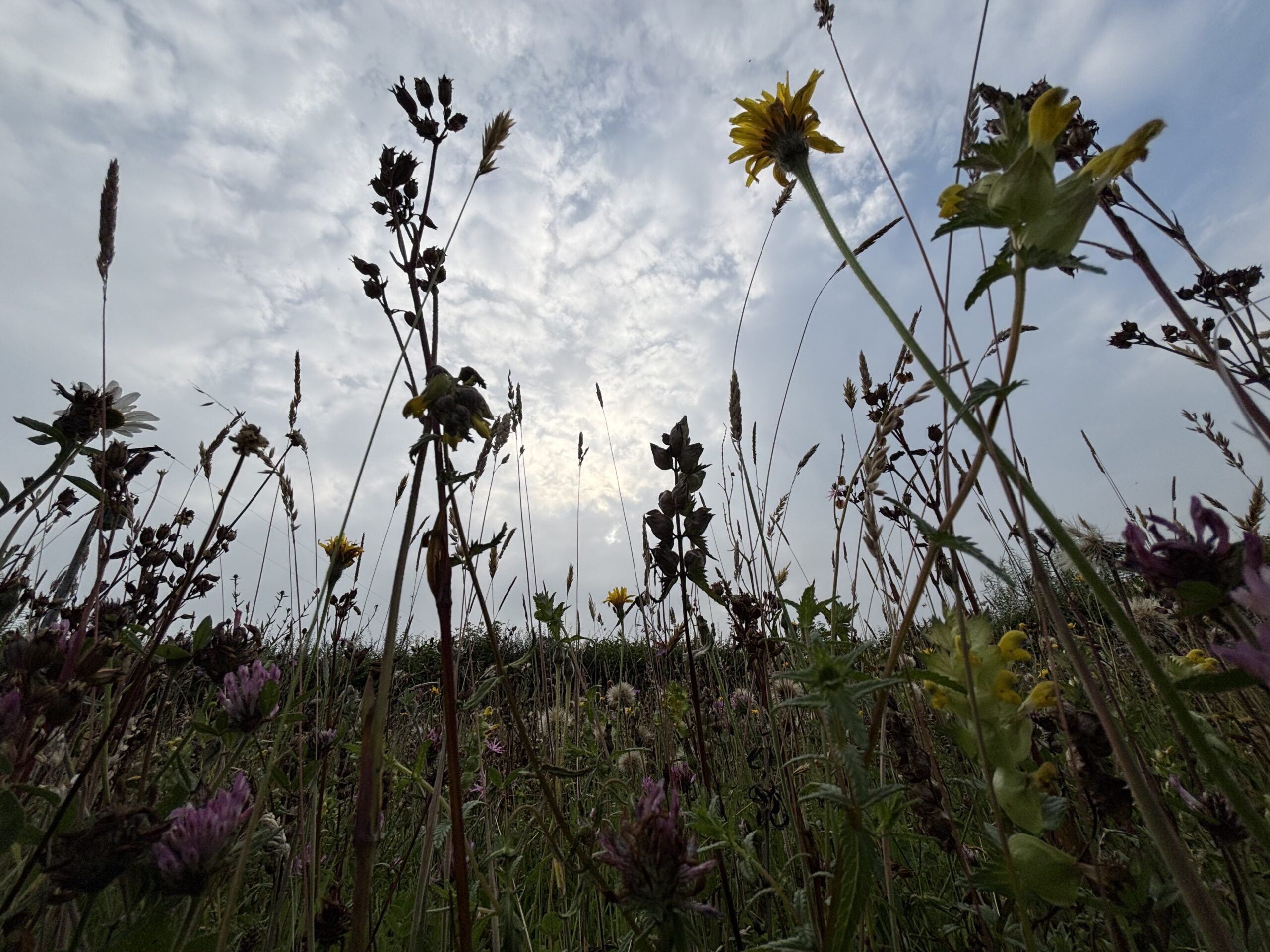
Green Sheep Camping’s Biodiversity Action Plan places strong emphasis on meadow management, habitat diversity, and pollinator support.
Our meadows aren’t just scenic — they are living systems supporting:
🌼 Wildflowers
🐝 Bees
🦋 Butterflies
🦇 Bats
🦉 Birds
🦋 Moths
Healthy meadows mean nectar sources, larval food plants, shelter, and microhabitats. In return, moths provide pollination and feed the wider food web. It’s a beautiful ecological loop — and one we actively nurture through thoughtful land management.
Our “Moths, Meadows & Barbecue” Evening
On 27 August 2025, we hosted one of our favourite community events of the year:
[IMAGE– Campers engaging with moth trap / group photo]

Clare Flynn joined us to share her knowledge, enthusiasm, and infectious passion for moths. The evening was everything we hoped:
✨ Community engagement
🍰 Glorious cakes & salads
🔥 Barbecue conversations
🦋 Moths revealed in all their detail
Together, we raised over £250, donated to the West Wales Rivers Trust to support their essential work protecting local waterways. A heartfelt thank you again to everyone who came, contributed food, and embraced the magic of nighttime ecology.
What Did We Find? (Prepare for Diversity…)
Across the wider Pembrokeshire group, more than 3,500 moth records were added to this important survey.
We were one of 19 participants who took part in moth trapping across the Pembrokeshire Coast National Park. Across the survey, 246 moth species were identified.
At Green Sheep Camping we trapped moths on 20 nights and recorded 434 individual moths representing 97 species (72 macro moth and 25 micro moth species). 13 of these species (e.g. the evocatively named Chinese Character) are declining and two species (Dusky Thorn and the superbly named True Lover’s Knot) are considered threatened.
Green Sheep Camping contributed a wonderfully varied species list, including:
- Elephant hawk moth
- Poplar hawk moth
- Silver Y
- Buff tip
- Black arches
- Peach blossom
- Drinker
- Canary-shouldered thorn
- Blood vein
- Common footman
- Garden rose tortrix
- White-shouldered house moth
- Bird cherry ermine
- Lime-speck pug
- Oak eggar
- Yellow-barred brindle
…and many more, indeed we recorded 115 species at our site.

Each species tells part of a larger story about habitat quality, vegetation structure, and seasonal dynamics. Some indicate healthy hedgerows, others thriving grasses or wildflowers.
Together, they form a living biodiversity fingerprint of the land.
The Joy of Discovering Nature After Dark
For campers, moth trapping nights often spark a shift in perspective.
Suddenly:
🔍 “Plain brown moths” become intricately patterned marvels
🌙 Nighttime becomes alive with movement
🧠 Curiosity replaces assumptions
🌿 Connection deepens
Children are especially brilliant at this — equal parts wonder and fearless fascination.
How You Can Join the Night Shift
You don’t need to be an ecologist to enjoy moths.
Simple ways to engage:
✔ Join a moth evening if one is scheduled
✔ Bring a torch and explore gently
✔ Notice night-scented flowers
✔ Listen for bats overhead
✔ Ask us about our meadow management
Wildlife isn’t just something you “see” here — it’s something you experience.

Stay Curious. Stay Wild.
Pembrokeshire’s landscapes are shaped by a long partnership between farming and nature. Projects like moth monitoring show how conservation, science, and land stewardship can work beautifully together.
At Green Sheep Camping, we’re proud to play a small role in that story.
And once you’ve stood beside a glowing moth trap under a Pembrokeshire sky, you’ll never think of “nightlife” the same way again.
🌿 Plan Your Own Wildlife-Rich Escape
If you’d like to wake up beside wildflower meadows, fall asleep under dark skies, and maybe even meet a moth or two at midnight…
👉 Book your stay at Green Sheep Camping in Pembrokeshire
Nature is waiting — day and night.
The full report of moths identified at Green Sheep Camping in 2025 is available on our website here: